


What Dermaplaning Does and Why O'ahu Loves the Instant Glow
11
2026
Here is the quick version: dermaplaning is a gentle exfoliation treatment that uses a sterile surgical blade to remove dead surface skin and the fine peach fuzz on your face, leaving skin instantly smoother, brighter, and makeup-ready. There is no downtime, which is why it is a favorite before events and photos across the island. In sunny O'ahu, where dull buildup is a constant battle no matter which town you are in, that immediate polish is genuinely satisfying. This July 2026 guide covers how it works, the real benefits, and the myths worth clearing up.
What is dermaplaning and how does it work?
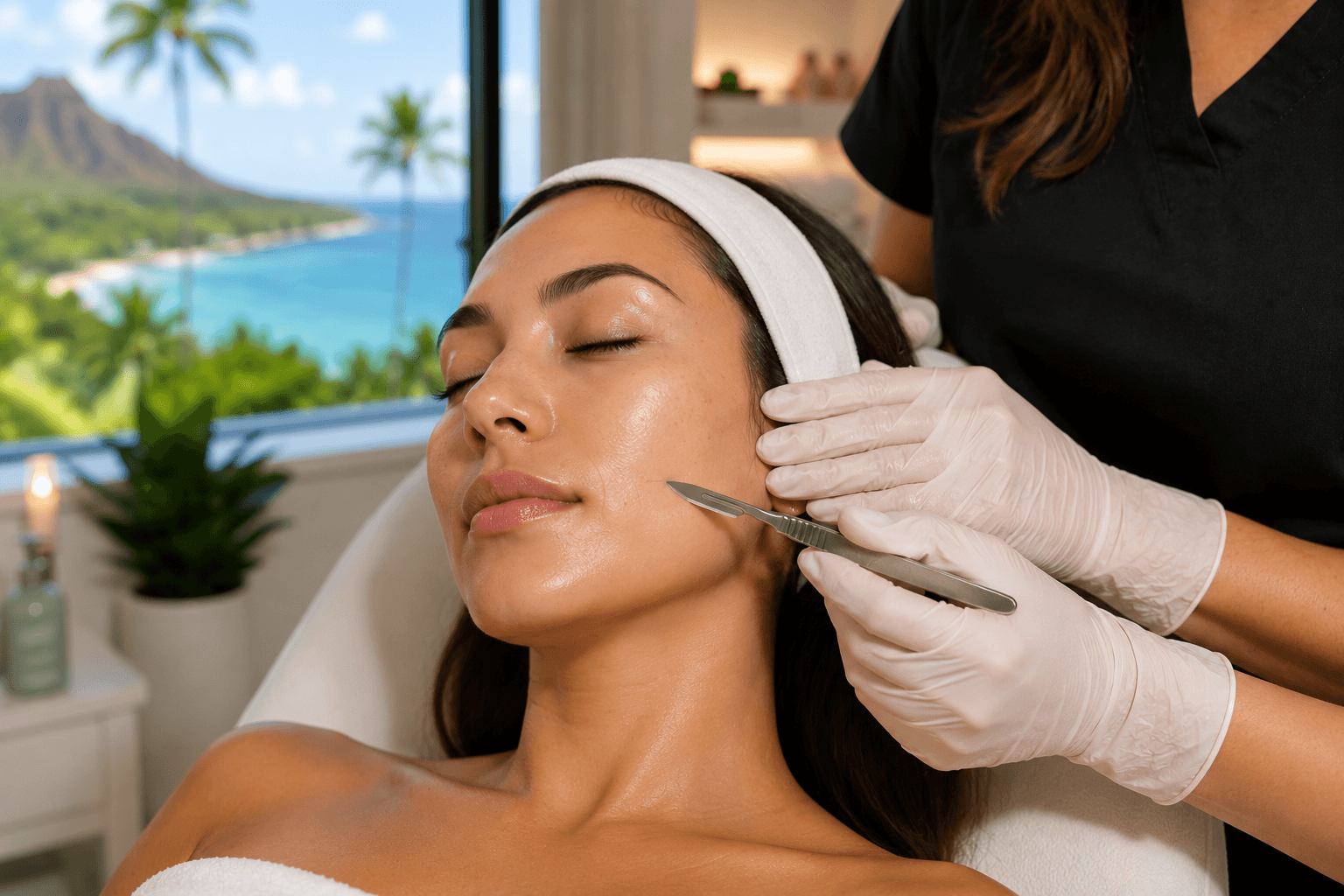
During the treatment, a trained provider holds a sterile blade at a precise angle and uses light, feathering strokes to skim away the outermost layer of dead skin cells along with the vellus hair, the soft peach fuzz, on your face. It is precise, controlled, and painless when done correctly. By removing that dull surface layer, dermaplaning reveals the fresher skin underneath and lets your skincare products absorb better. At MW Aesthetics Hawaii it is offered as a standalone Dermaplaning treatment and is a great fit for anyone battling dull skin or rough texture.
What are the benefits of dermaplaning?
The benefits are immediate and visible. Skin looks brighter and feels noticeably smoother right away. Makeup goes on flawlessly because there is no fuzz or flaky buildup to catch on. Skincare penetrates more effectively without that dead layer blocking it. And because it is purely mechanical exfoliation, there is no chemical irritation and no recovery time. It also softens the look of rough texture, giving skin a polished, healthy finish that photographs beautifully, a real plus for anyone with weddings, reunions, or vacations on the calendar.
Does dermaplaning make hair grow back thicker?
No, and this is the single most persistent myth about the treatment. Dermaplaning removes soft vellus hair, and that hair grows back exactly as it was, the same fine texture and the same color. It does not turn peach fuzz into coarse, dark hair. That misconception comes from confusing vellus hair with the coarse terminal hair on areas like the legs, which is different. The fuzz simply returns to how it was before, so there is no need to worry about a stubbly regrowth.
Is dermaplaning safe for sensitive skin?
For most people, yes, dermaplaning is gentle and well tolerated, and because it involves no acids or heat, it is often suitable even for sensitive skin. The exceptions are active acne breakouts, since dragging a blade over inflamed pimples can irritate them and spread bacteria, and certain skin conditions. If you are prone to breakouts, a provider may recommend timing your treatment carefully or choosing a different exfoliation approach. A quick consultation sorts this out, which is why a professional treatment beats any at-home blade.
How often should you get dermaplaning?
Every three to four weeks is a common rhythm, which aligns with your natural skin cell turnover cycle. Any more frequently and you risk over-exfoliating. Many people fold dermaplaning into a regular facial routine as a monthly refresh. It also pairs wonderfully with other treatments, since skin that has just been dermaplaned absorbs the actives in a Chemical Peel or the nourishing ingredients in a Vitality Infusion Facial more effectively. If you want to keep it consistent, ask about membership and current specials.
What should you do afterward in the Hawaii sun?
Freshly dermaplaned skin has lost its outermost protective layer, so sun protection is non-negotiable anywhere on O'ahu. Wear a broad-spectrum sunscreen and be diligent about reapplying, especially if you are heading to the beach. Skip harsh actives like retinoids and strong acids for a day or two, keep skin hydrated, and avoid direct sun immediately after. Because there is no true downtime, you can go about your day, just be smart about UV exposure while your skin is at its freshest and most vulnerable.
Frequently Asked Questions
Does dermaplaning hurt? No, it is painless when performed by a trained provider, feeling like a light scraping sensation with no downtime afterward.
How often should I get dermaplaning? Every three to four weeks works well for most people, since that matches the skin's natural cell turnover cycle and avoids over-exfoliating.
Is dermaplaning safe for sensitive skin? It is generally gentle and suitable even for sensitive skin because it uses no acids or heat, though it is best avoided over active acne breakouts.
Smooth Sailing, The Sign-Off
If you want that instant, glowing, makeup-ready smoothness with zero downtime, dermaplaning is hard to beat. To find out if it fits your skin, visit the MW Aesthetics Hawaii homepage and book through the contact page.
This is a blog post title....
This is a blog post title....