


Why Does Your Skin Still Look Dull After Regular Facials, and Can a Medical Facial Help?
30
2026
Updated September 2026
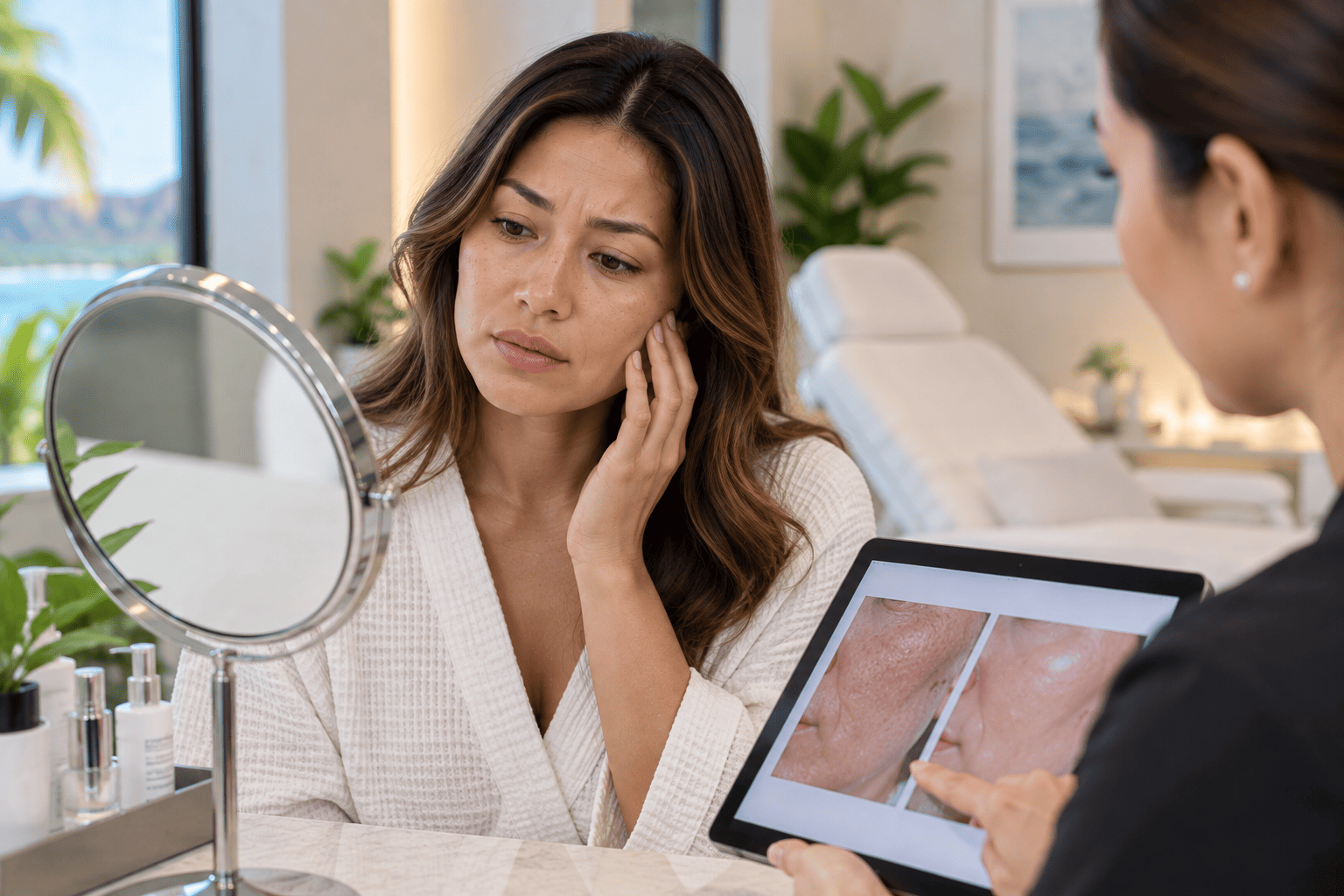
You book the facial. You leave feeling fresh and glowing. Then a week later, the same flat tone, the same rough patches along your cheeks, and the same pores that seem to get bigger every time you catch your reflection on your phone screen. If that cycle sounds familiar, you are not doing anything wrong. Most facials are simply designed to care for the surface, while the reasons behind dull, congested skin usually sit deeper.
On O‘ahu, your skin works overtime. Year-round sun, salt water, heavy sunscreen, and trade winds that feel lovely but quietly pull moisture from the skin all add up. A medical facial takes a different approach by supporting how your skin repairs and renews itself, not just how it looks for the next few days.
Why Does My Skin Look Dull Even When I Get Facials Regularly?
Dull skin usually comes from a slowdown in cell turnover, a buildup of dead skin cells, dehydration, or early collagen changes. Traditional facials can brighten temporarily, but they rarely change the processes underneath. That is why the glow fades so quickly.
Healthy skin sheds and replaces cells on a regular cycle. As we age, or when skin is stressed by sun and inflammation, that cycle slows. Dead cells pile up, light stops reflecting evenly, and the complexion starts to look tired. Our page on dull skin walks through the common causes in more detail.
Is It Possible to Have Dehydrated Skin in Humid Hawaii?
Yes, and it happens more often than people expect. Humidity adds moisture to the air, but it does not guarantee your skin is holding onto water. Long days at Ala Moana Beach, air-conditioned offices downtown, hot showers, and foaming cleansers can all leave skin tight, crepey, or oddly shiny at the same time.
Dehydration is a lack of water, not oil, so even oily and acne-prone skin can be dehydrated. Watching your skin hydration before and after cleansing is a simple clue. If your face feels tight within minutes of washing, your barrier is likely struggling. Learn more about dehydrated skin and why it often shows up as dullness first.
What Causes Enlarged Pores and Rough Texture?
Enlarged pores and rough texture are usually driven by excess oil, trapped debris, sun damage, and gradual collagen loss around the pore walls. When the skin surrounding each pore loses firmness, pores look larger and the surface feels uneven.
On the island, reef-safe mineral sunscreens (which you absolutely should keep wearing) can be thicker and harder to remove fully. Add sweat from a morning climb up the Koko Head stairs or a paddle out at Kaimana, and congestion builds fast. Over time, that congestion stretches pores and contributes to rough texture that makeup only seems to highlight.
Can Overexfoliating Make These Problems Worse?
Absolutely. Stacking acids, retinoids, and scrubs, a routine many younger adults pick up from skincare videos, can strip the barrier and trigger redness, stinging, and breakouts. The skin then produces more oil to compensate, which clogs pores further.
The American Academy of Dermatology has long cautioned that too much exfoliation can irritate skin rather than improve it. If your products suddenly burn or your face looks shiny but feels rough, you may be dealing with a compromised skin barrier. The fix is usually fewer products, better formulas, and professional guidance, not another scrub.
What Is a Medical Facial, and How Is It Different From Regular Facials?
A medical facial is a clinical treatment performed in a medical setting that targets the skin at the cellular level, using tools and ingredients designed to stimulate repair, collagen production, and healthy renewal. Regular facials focus mainly on cleansing, extractions, and relaxation.
A medical facial is built around your specific concern. It might use controlled microchannels to prompt collagen, growth factors from your own blood to support healing, or professional-strength exfoliants to reset turnover. Results tend to build over time instead of fading after a few days.
You may have also heard of HydraFacial, a popular multistep treatment that cleanses, exfoliates, and infuses serums through a handheld device. It is known for instant radiance with little downtime. For people who want longer-lasting changes in texture, pore appearance, and firmness, treatments that encourage the skin's own regeneration are often a better fit.
Which Medical Facial Treatment Fits My Skin Concern?
The right medical facial depends on what you want to change. Dullness and early aging respond well to regenerative options, rough texture and uneven tone often benefit from resurfacing, and dehydration or barrier issues call for gentler, restorative care. Here is how our skin health treatments line up with common concerns.
Vitality Infusion Facial
The Vitality Infusion Facial combines microneedling with PRP, a concentrate of platelets drawn from your own blood. Microneedling creates tiny controlled channels in the skin, and the growth factors in PRP help support the natural repair response. It is designed for early signs of aging, dullness, and uneven texture, and it can help refine the look of pores as collagen improves. Most people do a series of three sessions spaced several weeks apart.
Chemical Peels
Chemical peels use carefully selected acids to lift away dull, damaged surface cells and encourage fresh turnover. They are helpful for uneven tone, congestion, and texture, and the strength can be adjusted to suit your skin and schedule.
Dermaplaning
Dermaplaning gently removes dead skin and fine vellus hair with a sterile blade, leaving skin smoother and allowing products to absorb better. It is a great lunch-break option for professionals who want an instant polish before a big meeting or event, and it pairs well with other treatments. Explore dermaplaning if your makeup never quite sits right.
Regenerative Skin Hydration and SkinPen Microneedling
For skin that feels tight, tired, or depleted, regenerative skin hydration focuses on restoring moisture and resilience from within. If texture and pore size are your main frustrations, SkinPen microneedling stimulates collagen to smooth and firm over a series of sessions.
Quick Comparison: How to Choose
- Dull, tired skin with early aging: Vitality Infusion Facial, or a light chemical peel for a faster refresh
- Rough texture and enlarged pores: SkinPen microneedling or the Vitality Infusion Facial
- Uneven tone and congestion: chemical peels paired with medical-grade skincare
- Dehydration and a sensitive barrier: regenerative skin hydration and a simplified home routine
- Instant smoothness before an event: dermaplaning
Many people have more than one concern, so our team helps sequence treatments thoughtfully.
What Results and Downtime Should I Expect?
Results depend on the treatment. Dermaplaning and light peels offer a glow almost immediately, while microneedling and PRP build gradually over weeks. Downtime ranges from none to a few days of redness.
After a Vitality Infusion Facial, expect redness and sensitivity for roughly 24 to 72 hours, similar to a mild sunburn. Busy professionals often book it on a Friday so they can rest over the weekend. Peels may cause light flaking for several days depending on depth.
Sun protection matters more than ever after any resurfacing treatment, and on O‘ahu that means planning around beach days and hikes. Skip midday Diamond Head hikes and save surf sessions until your skin has calmed. Results vary from person to person.
Who Is a Good Candidate for a Medical Facial?
Most healthy adults who want brighter, smoother, more resilient skin are good candidates. A consultation helps confirm the best option, especially if you have active skin infections, certain medical conditions, or are pregnant.
People in their twenties often come to us after overdoing it with trendy products and wanting to calm breakouts while preventing early damage. Professionals juggling long workdays and an H-1 commute often notice stress showing up as dullness and breakouts, and they want effective care that fits a lunch hour or a Friday afternoon. Others simply want a curated, long-term plan. If you have a history of cold sores, keloid scarring, or you take medications that affect healing, share that at your visit so we can plan safely.
How Do Medical-Grade Products Extend My Results?
Medical-grade skincare from brands like SkinCeuticals and Skinbetter contains well-researched ingredients at effective concentrations. A daily antioxidant, a barrier-supportive moisturizer, and a broad-spectrum sunscreen are the foundation most skin needs in Hawaii's intense UV environment.
Why Choose MW Aesthetics as Your Hawaii Medspa?
MW Aesthetics is a boutique concierge Honolulu medspa on Bishop Street, focused on personalized plans and naturally refined results. Clients visit from across O‘ahu, from Kaka‘ako and Mānoa to Kailua, Kapolei, and the North Shore.
Every plan begins with listening: our providers consider your skin, routine, schedule, and time outdoors before recommending anything. For clients who prefer ongoing, curated care, our membership program offers personalized treatment plans with added savings, and private on-location services are available for those who value discretion. You can explore everything we offer on our homepage.
Frequently Asked Questions
How often should I get a medical facial in O‘ahu, Hawaii?
Regenerative options like the Vitality Infusion Facial are usually done as a series of three sessions spaced several weeks apart, followed by maintenance. Lighter treatments like dermaplaning can be repeated more frequently.
Is a medical facial painful?
Most people find it very tolerable. For microneedling-based treatments, a topical numbing cream is typically applied beforehand, so you feel mostly pressure and light vibration.
Can I get facials if I have sensitive or acne-prone skin?
Yes, but the approach should be tailored. Sensitive skin often needs barrier repair before stronger treatments, and acne-prone skin benefits from options that reduce congestion without harsh scrubbing.
How is a medical facial different from a HydraFacial?
A HydraFacial is a device-based treatment known for cleansing, exfoliating, and hydrating with instant radiance. A medical facial such as microneedling with PRP focuses on stimulating collagen and supporting deeper repair, so results tend to build and last longer over time.
Will a medical facial help my skin hydration before and after sun exposure?
A medical facial can strengthen skin resilience and improve how well your skin holds moisture, especially when paired with a supportive home routine. Daily sunscreen and hydrating serums remain essential in Hawaii's climate.
Where can I find a medical facial in Honolulu?
MW Aesthetics offers medical facials at our boutique studio on Bishop Street in downtown Honolulu, welcoming clients from all over O‘ahu.
Because Your Glow Should Outlast the Weekend
If your facials have been leaving you with a glow that disappears before the weekend, it may be time to treat the cause instead of the surface. A thoughtful medical facial plan can help your skin look brighter, smoother, and more like itself, whether you spend your days in a downtown office or on the sand at Waikīkī. When you are ready, contact our team to book a consultation and start a plan built around your skin.
This is a blog post title....
This is a blog post title....