

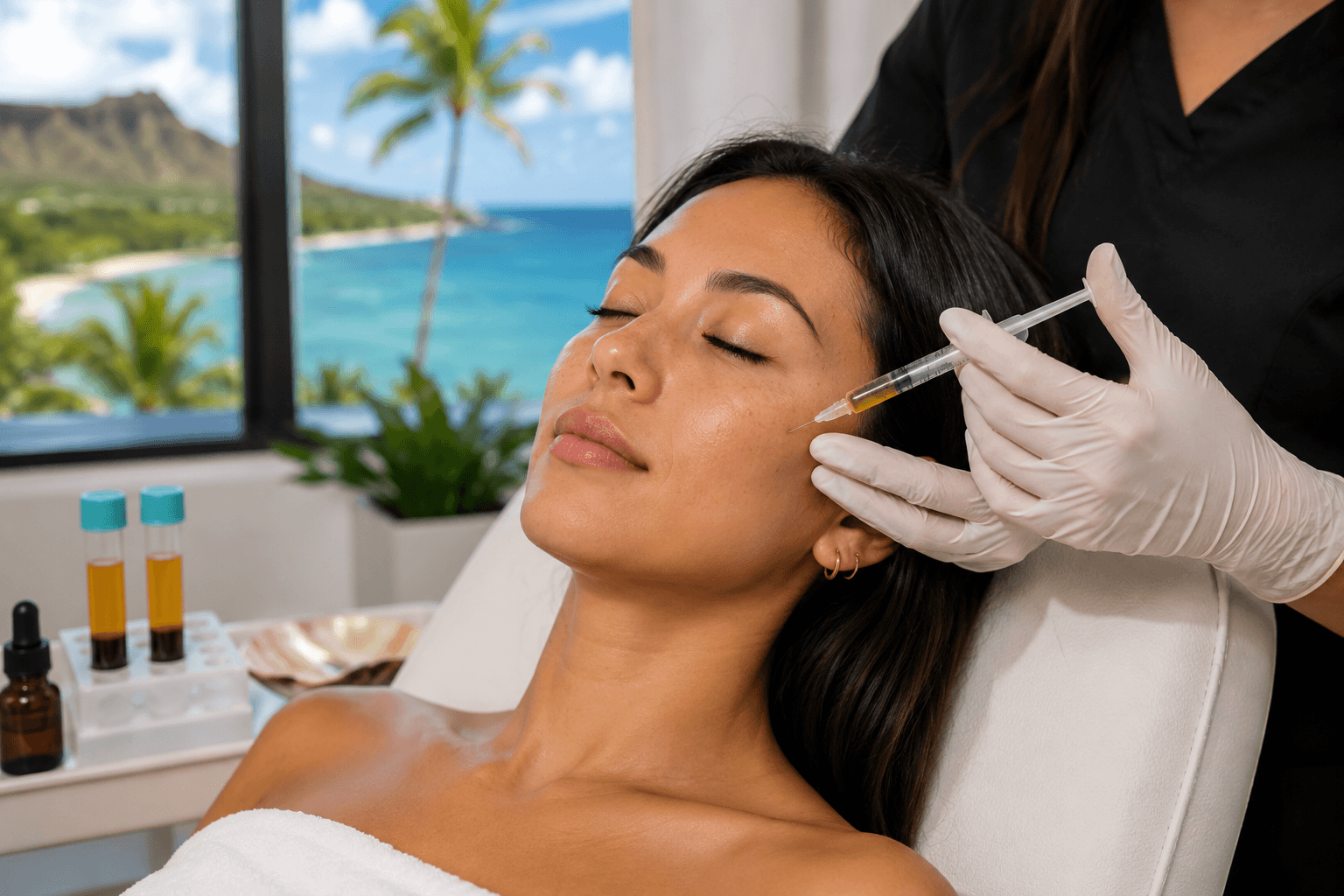

What PRP Rejuvenation Is and Why It Works With Your Own Biology
11
2026
Here is the core idea: PRP rejuvenation uses a concentrated portion of your own blood, rich in platelets and growth factors, to stimulate collagen, repair tissue, and refresh skin and hair naturally. Because it comes from you, there is nothing foreign involved, which is a big part of its appeal. Across O'ahu, where sun exposure accelerates collagen loss no matter which coastline you live near, regenerative treatments that rebuild from within are increasingly popular. This July 2026 guide explains the science, the uses, and what to realistically expect.
How does PRP rejuvenation work?
The process is straightforward. A small amount of your blood is drawn, then spun in a centrifuge to separate and concentrate the platelets and growth factors. That concentrated plasma is then applied to or injected into the treatment area. Those growth factors signal your body to ramp up collagen production, repair, and renewal. At MW Aesthetics Hawaii, this is offered through PRP, PRF, and PRFM, which are related regenerative preparations, and it pairs beautifully with SkinPen Microneedling, where micro-channels help the growth factors penetrate for a stronger collagen response.
What can PRP rejuvenation treat?
This is a genuinely versatile tool. On the face, it improves skin tone, texture, fine lines, and overall radiance by boosting collagen. It is particularly valued for the delicate under-eye area, addressed here through Under-Eye Regeneration, where it can help with dark circles and crepey skin that filler alone cannot fix. It supports hair growth in thinning areas, and it is also used in intimate wellness. Because it works by prompting your own collagen stimulators to fire, it falls into the same regenerative family as the biostimulators we cover in our collagen article, though PRP relies on your own biology rather than a synthetic product.
Can PRP help with hair thinning?
Yes, and it is one of the most popular non-surgical options for early to moderate thinning. Injected into the scalp, the growth factors can extend the hair growth cycle and strengthen existing follicles, which can mean thicker-looking hair over a series of sessions. If thinning is your concern, start with our page on hair thinning and our article on PRP for hair loss, and explore the broader Hair Restoration options. PRP works best on follicles that are still active, so earlier treatment tends to give better results.
How many sessions do you need?
Most protocols involve an initial series of three or more sessions spaced several weeks apart, followed by periodic maintenance. Skin rejuvenation and hair treatments both build gradually because you are stimulating your body to do the work over time, not installing an instant result. Expect to be patient and consistent, since the collagen and follicle response develops over weeks and months. Cost is typically set per session or as a package, and your provider will confirm figures at consultation.
Does PRP rejuvenation hurt, and is there downtime?
The blood draw feels like any routine lab draw. The treatment itself, whether microneedling with PRP or scalp injections, involves some discomfort that numbing minimizes, and most people tolerate it well. Downtime is minimal. With facial microneedling and PRP you can expect redness similar to a mild sunburn for a day or two, and scalp treatments may be slightly tender. Because it uses your own biology, the risk of allergic reaction is very low, which is a meaningful safety advantage.
Is PRP rejuvenation right for you?
It is a strong fit if you want natural, gradual improvement and prefer working with your own biology over synthetic products, whether your goal is glowing skin, refreshed under-eyes, or fuller hair. It is not an overnight fix, so it suits patient people who value long-term regeneration. As with any medical treatment, a consultation determines candidacy based on your health and goals. You can read genuine client experiences from across the island in the reviews section.
Frequently Asked Questions
Is PRP rejuvenation safe? Because it uses a concentrated portion of your own blood, the risk of allergic reaction is very low, and it has a strong safety profile when performed by a qualified medical provider.
How many PRP sessions do I need? Most people start with a series of three or more sessions spaced weeks apart, followed by maintenance, because results build gradually as your body responds.
Does PRP rejuvenation hurt? The blood draw is like a routine lab test and the treatment involves manageable discomfort that numbing minimizes, with only minimal downtime afterward.
Your Own Blood, Your Best Glow
There is something reassuring about a treatment that simply amplifies what your body already does. If you are curious whether regenerative treatment fits your skin or hair goals, visit the MW Aesthetics Hawaii homepage and book a consult through the contact page.
This is a blog post title....
This is a blog post title....